Get more value from every newsletter you send
There is one problem with email marketing. An email is a one-off, so all the good time you spend on the content benefits your recipients exactly once.
That is a waste. More and more senders spend more time on the content of each newsletter, because better content gets better results. If that is you, it is worth considering resending the newsletter to the people who did not open it.
Why resend?
Because it raises the chance that your content is actually read.
Three things mainly decide whether an email is opened and read:
- Timing
- Subject line
- Sender
The sender name carries credibility and tells the recipient whether it is worth the time. The subject line speaks for itself — a dull one rarely gets anyone to read anything. But timing matters enormously.
Imagine sending a newsletter to families with children at four in the afternoon. They are on their way home, and ahead of them are dinner, bedtime and packed lunches before there is any real time for the inbox again. By then the email is nearly four hours old, and the odds of it being opened fall sharply after the first couple of hours.
Resending gives you one more chance at the same reader.
Choose who gets it again
The newsletter should not go to everyone a second time — only to those who did not open it the first time. And here is the first caution.
Email systems like ours can only register an open if the images in the message were loaded or the recipient clicked a link. So a recipient who did neither will not appear as a reader, even if they read every word.
Fortunately most people have got used to images loading automatically, and more and more mail clients load them by default.
The opposite problem is that open rates are often unnaturally high, because recipients using Apple’s mail app have their messages pre-opened on their behalf. So a message can be recorded as opened when nobody looked at it.
An alternative to using opens as your measure is to look at whether the recipient clicked.
So you might resend to recipients who did not open, or to those who did not click. With the first, you are nearly certain to be reaching people who did not read it.
Mind your timing
Do not resend too quickly. Leave at least 48 hours, so recipients have had time to react to the first version. That also means resending is not for everyone and does not work in every case — in a busy period it can be hard to fit a resend around your other campaigns.
Choose a new subject line
Some mail clients group messages with the same subject, from the same sender, into one conversation in the inbox. When that happens, the second email looks like this.
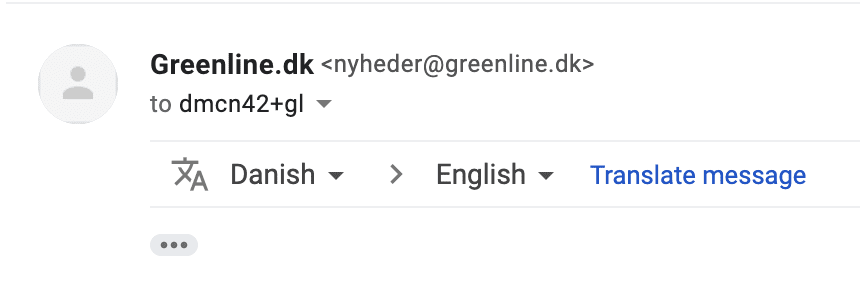
The whole content is folded away behind three dots. Not very compelling.
So pick a new subject line, and clients like Gmail will treat it as two separate messages. You can also move your content around, so the recipients who did read without loading images do not immediately notice that you are reusing it.
Send at a different time of day
As above, one of the things deciding whether an email is read is when it arrives. Change the time of day when you resend — if the first went at ten in the morning, send the second at two in the afternoon, catching people at a different point in their working rhythm.
That matters especially if you always send at the same time. Your recipients’ rhythm is usually much the same every day, which means they have time for email in the same window. If you never hit that window, they rarely open anything you send.
Watch your statistics
When you start resending, keep a close eye on the numbers. If unsubscribes rise, the resends may be the cause, and you should stop.
It is something we almost never see when we help customers set this up, but it is worth watching for.
Clean up first
We always recommend cleaning your lists regularly, and there is more on why here.
It matters even more when you resend. The inactive recipients who damage your sender reputation when you mail them are also the ones now receiving the same newsletter twice — and opening it neither time.
That is not a reason to be nervous about resending. It is a reason to do it properly.