GDPR · 25 April 2018
The GDPR and consent
If your consent is in order, the GDPR does not require you to send a consent email. But if there is the slightest doubt, here is our advice on how to word one – along with examples from other senders.

The cut-off date of 25 May is approaching, and we are receiving more and more enquiries about the GDPR. One of the typical questions concerns consent to marketing.
These days we are regularly asked whether, as a sender of newsletters, you need to confirm your recipients’ consent before the cut-off date. The questions probably arise because our customers are receiving large numbers of emails along the lines of this one from Matas.
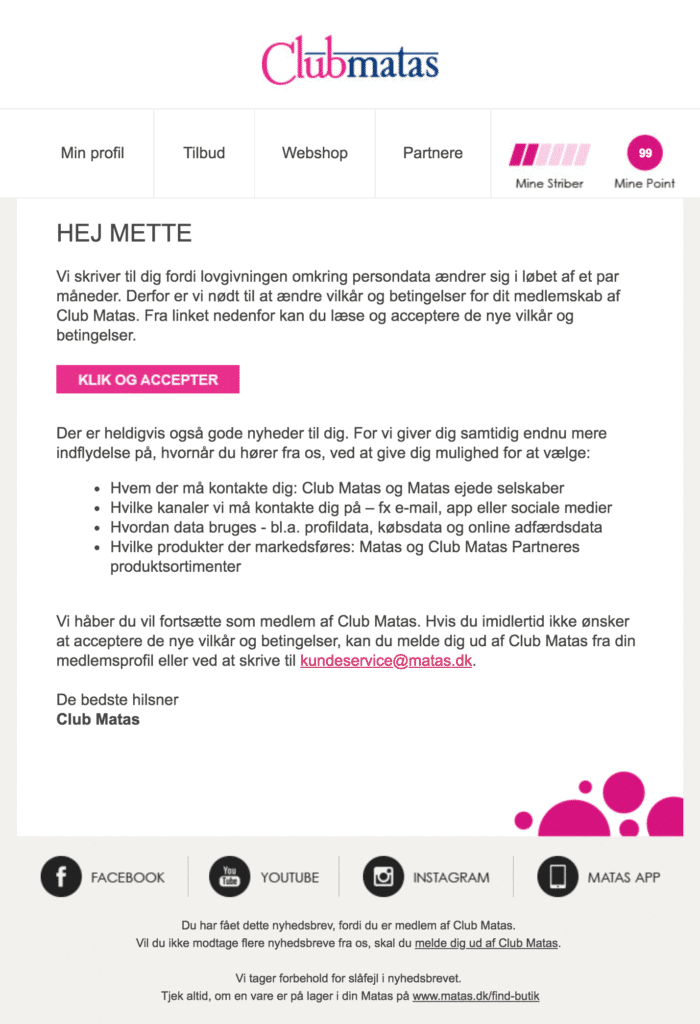
If your consent is in order, there is nothing in the GDPR that requires these emails to be sent. But if there is the slightest doubt about whether you can document a consent to marketing, an email like the one above can be a good solution.
Wording your consent email
When you write your email asking your recipients to confirm their consent, make sure to keep it short and to the point. Your recipients are not interested in the GDPR, the legal problems it deals with, and so on – they are interested in you as a sender, and in what they need to do to keep receiving your emails in future.
Remember to highlight “what’s in it for me” – your recipients may have forgotten exactly what it is your company sends, particularly if a few weeks have passed since the last newsletter.
There is also nothing legally standing in the way of giving away a gift or a prize to those who confirm their consent. You could, for example, offer a gift basket or a product from your webshop and draw a winner after the 25th. That may be the incentive some people need in order to confirm their consent.
You should, however, expect some drop-off in the process. A certain percentage of your recipients will not confirm their consent, and if they have not done so before 25 May, you really only have one option for getting them back on board: getting them to sign up again, for example on your website, through Facebook Lead Ads, or something similar.
But the drop-off is not all bad, because a consent email can help you clean up your lists. In the end you get an email list of interested recipients, and you cut away the recipients who were not reading your emails anyway. That is a good thing!
How to do it
In connection with the GDPR we have built a feature for collecting consents. If you are in the slightest doubt, we are ready to help in support.
Examples from others
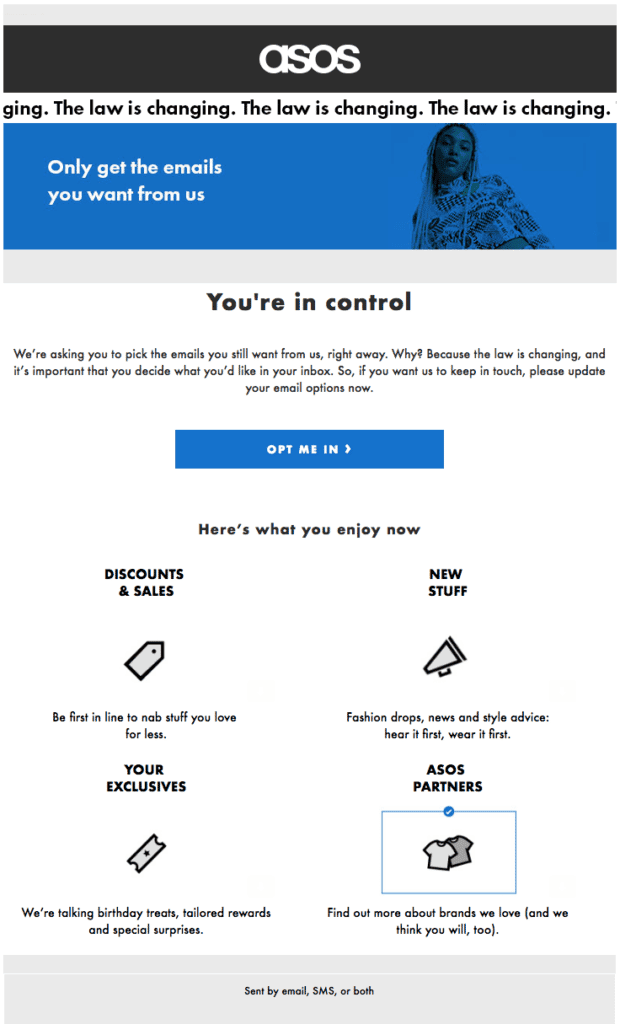
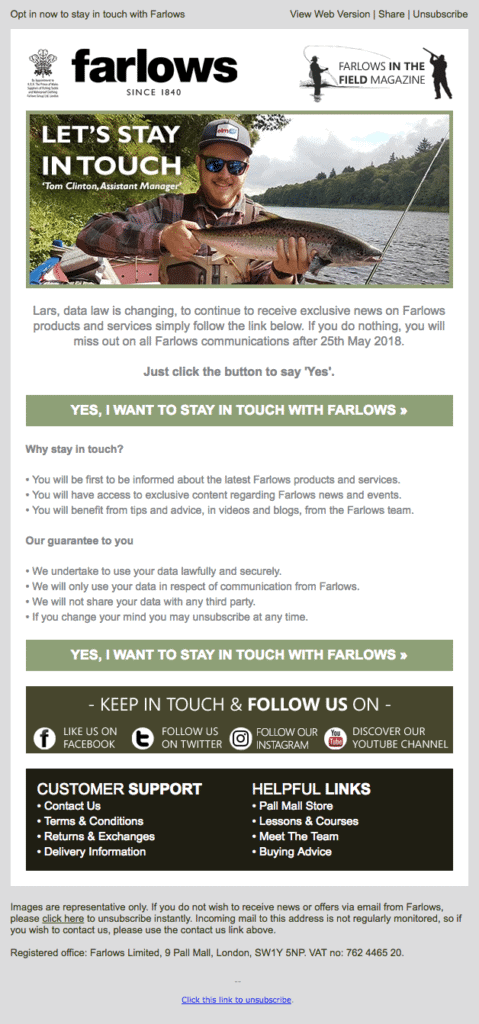
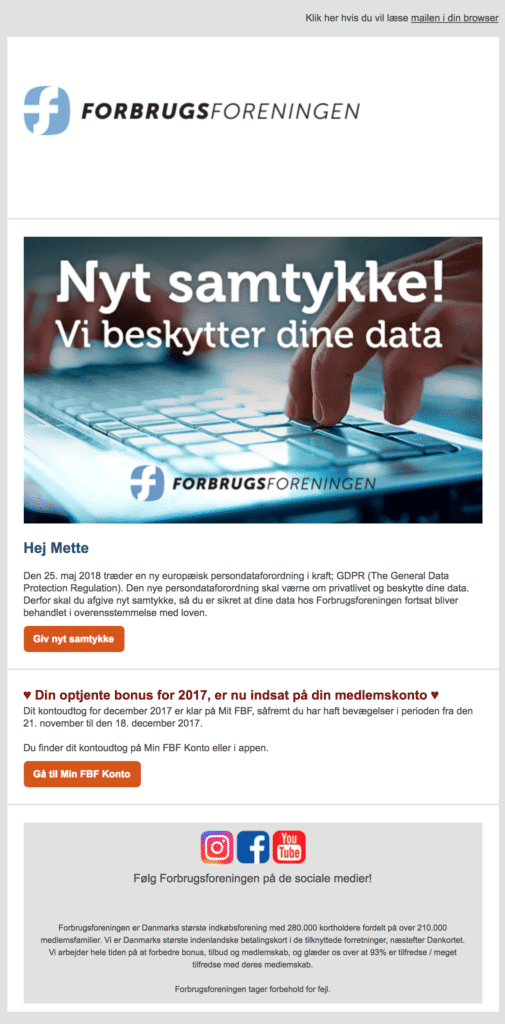
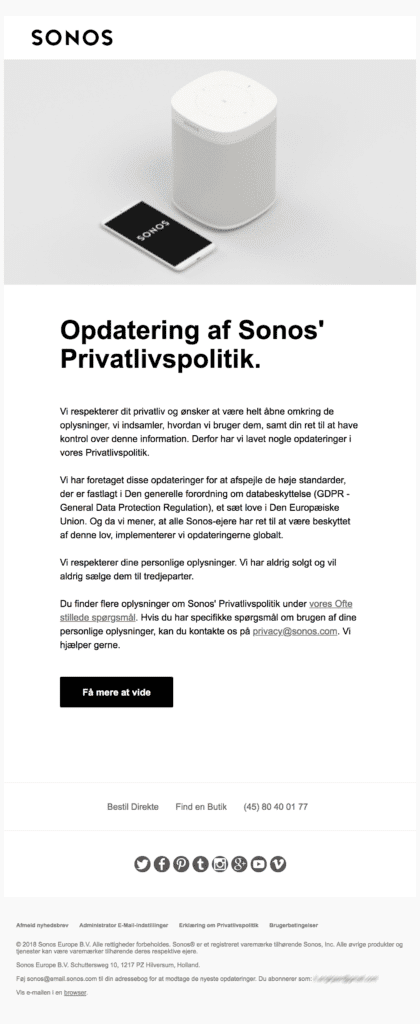
We have collected a number of examples of emails in which the sender asks the recipient to confirm their consent. You can use them as inspiration for content and structure.